about
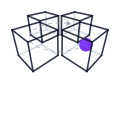
about: its core feeling is moving around a person, thing, time point, or idea, which helps explain around/surrounding, concerning, and approximately.
- Around a real thing: around, nearby, here and there, surrounding.
- Around a topic: about, concerning, related to.
- Around a number or time point: approximately, roughly, about.
Scene category
Controls
Drag to rotate / Scroll to zoom / Pinch to zoom
Examples
Spatial examples
Books were lying about the room.
There were toys scattered about the floor.
Time examples
It’s about ten o’clock now.
There were about twenty people in the hall.
The drive took about two hours.
Dynamic examples
The children ran about the yard.
Guests moved about the hall before dinner.
Abstract examples
We talked about your idea after lunch.
She is worried about the exam tomorrow.
This book is about space travel.
Related prepositions


Key differences
Do not memorize about as only 'concerning'. Start with the image of moving around a center: around a topic gives 'about', and around a time/number gives 'approximately'.
Around is more visibly spatial: moving in a circle or staying around a place. About extends more naturally to topics and approximate amounts.
About means content centered on a topic. On can also introduce a topic, but it often sounds more formal in talks, lectures, and titles.
Quick check questions (decision tree)
Is the subject approximate, surrounding something, or the topic being discussed?
about: its core feeling is moving around a person, thing, time point, or idea, which helps explain around/surrounding, concerning, and approximately.
Do you need around instead because it is more visibly spatial: moving in a circle or staying around a place?
Around is more visibly spatial: moving in a circle or staying around a place. About extends more naturally to topics and approximate amounts.
Is this a formal title, lecture, report, or focused treatment of one subject?
About means content centered on a topic. On can also introduce a topic, but it often sounds more formal in talks, lectures, and titles.
Is the relationship loosely around a real object rather than a precise circular path?
Yes -> about is the intended choice.
Common collocations
Topics and content
Time and quantity
Feelings and reactions
Common mistakes
Avoid: We discussed about the plan.
Use: We discussed the plan. / We talked about the plan.
Reason: Discuss normally takes a direct object. Use about with talk, not with discuss.
Avoid: I heard the accident yesterday.
Use: I heard about the accident yesterday.
Reason: Hear about means learn news of something. Without about, it sounds like you literally heard the accident itself.
Avoid: She is angry for the noise.
Use: She is angry about the noise.
Reason: Use about when the feeling is centered on a cause: angry about, worried about, excited about.
Mini quiz
Question 1
It’s ___ ten o’clock now.
Choose an answer
Question 2
We talked ___ your travel plan for an hour.
Choose an answer
Question 3
She is worried ___ the exam tomorrow.
Choose an answer
Quick FAQ
Why can about mean both 'concerning' and 'approximately'?+
Because its core feeling is moving around a center. Around a topic gives the idea of 'concerning', and around a time or number gives 'approximately'.
What is the easiest spatial image for about?+
Think of things being around a place or scattered here and there. In Books were lying about the room, the books are not in one exact point; they are around the room.
What is the difference between about and around?+
Both can mean surrounding or approximately, but around stays more visibly spatial. About extends more naturally to topics, feelings, causes, and rough numbers.
Can about and on both mean 'about a topic'?+
Yes, but about is more everyday and conversational. On often sounds more formal in lectures, talks, reports, or titles.
Why do we say talk about, but discuss the plan?+
Talk needs about to introduce the topic. Discuss already contains that idea, so it usually takes the object directly: discuss the plan.
What does about mean in be worried about / happy about?+
It points to the cause your feeling is centered on. Worried about the exam means the exam is the thing your worry circles around.
Does about mean an exact time?+
Usually no. About ten o’clock means around ten, not exactly ten. For an exact clock time, use at ten o’clock.
How can I remember about quickly?+
Keep one sentence in mind: about means circling around a center. Then connect three patterns: about the topic, about ten o’clock, run about the yard.